
Views: 388 Author: Site Editor Publish Time: 2026-08-20 Origin: Site


Balancing flavor, safety, and shelf life is a complex challenge in food manufacturing. One essential ingredient that helps achieve this balance is the acidity regulator. At Sunway Group, we provide high-quality acidity regulators designed to improve food safety, enhance flavor, and maintain product stability across various types of food products. Understanding what an acidity regulator is and its vital role enables both manufacturers and consumers to appreciate how it contributes to delivering safe, delicious, and long-lasting foods.
Acidity regulators are food additives that control or adjust the pH level in food products. The pH scale measures acidity or alkalinity on a range from 0 (highly acidic) to 14 (highly alkaline). Even small changes in pH can have significant effects on food safety, flavor, texture, and shelf life. By stabilizing or modifying pH levels, acidity regulators help maintain consistent quality and safety throughout a product’s lifespan.
One of the most crucial functions of acidity regulators is maintaining pH levels that inhibit harmful microorganisms such as bacteria, molds, and yeasts. Many pathogens thrive in neutral or slightly alkaline environments, but acidity regulators create an acidic environment that suppresses their growth. This control reduces spoilage and prevents foodborne illnesses.
For example, canned foods, beverages, and sauces rely heavily on acidity regulation to create conditions that prevent microbial contamination. By doing so, acidity regulators reduce the need for stronger chemical preservatives, which benefits both manufacturers and consumers by promoting safer, more natural products.
Moreover, the importance of pH control extends beyond safety to regulatory compliance. Many food safety standards and certifications require strict control of acidity to minimize microbial risks. Using acidity regulators helps manufacturers meet these standards, reducing liability and ensuring consumer trust.
Beyond safety, acidity regulators significantly affect a food’s flavor profile. Adjusting acidity can add brightness, balance sweetness, and soften bitterness, enhancing overall taste. Citric acid, for example, imparts a fresh, tangy note in fruit juices and candies, while lactic acid provides subtle sourness in dairy and fermented foods.
In addition, acidity regulators help preserve natural flavors during processing and storage. Without proper pH control, flavors may degrade or develop off-notes over time. Maintaining the correct acidity ensures that products taste fresh and appealing from production to consumption.
Furthermore, acidity regulators can also reduce the need for added sugars or artificial flavorings by naturally enhancing taste profiles, aligning with current consumer demands for cleaner labels and healthier ingredients.
Acidity regulators also influence the physical characteristics of foods. They interact with proteins, starches, and gelling agents, affecting texture and consistency. In yogurt and cheese, for instance, lactic acid supports gel formation, contributing to creamy or firm textures.
In other products such as salad dressings or sauces, acidity regulators prevent separation and maintain emulsification. They can also slow enzymatic browning and color changes, preserving visual appeal. By stabilizing pH, acidity regulators help products retain their sensory qualities, which is essential for consumer acceptance.
Additionally, acidity regulators play a role in the manufacturing process itself. For example, they can adjust the processing conditions by controlling the pH, which affects enzyme activity and chemical reactions, leading to improved product yields and consistency.
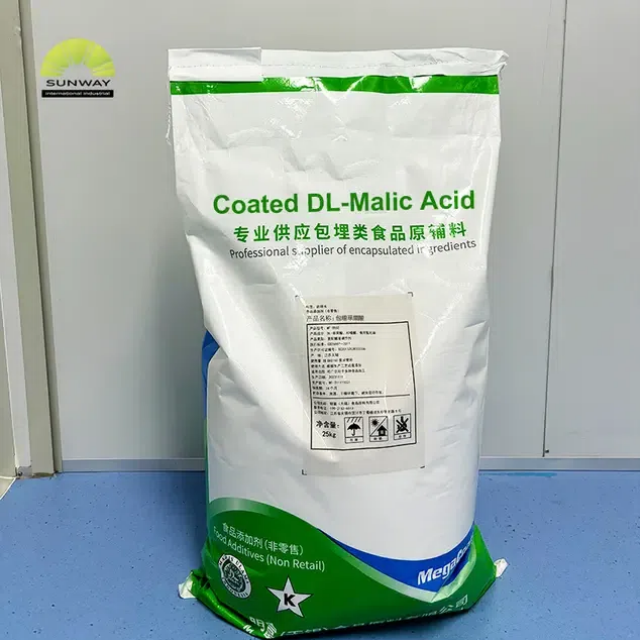
Sunway Group supplies a broad range of acidity regulators suitable for diverse applications. Below are some commonly used types and their key features:
Citric Acid (E330)
One of the most versatile acidity regulators, citric acid naturally occurs in citrus fruits and is widely produced by fermentation. It has a clean, sharp sour taste and excellent antioxidant properties. Citric acid is used extensively in beverages, canned fruits, jams, and dairy products to enhance flavor, control pH, and extend shelf life.
Lactic Acid
Produced via fermentation, lactic acid offers mild acidity and is commonly used in dairy products, pickled vegetables, and fermented foods. It enhances flavor complexity and inhibits spoilage organisms by lowering pH.
Acetic Acid
As the main component of vinegar, acetic acid delivers a strong tangy flavor and antimicrobial effects. It is widely applied in pickling, sauces, and condiments for taste and preservation.
Malic Acid
Naturally found in apples, cherries, and pears, malic acid provides a smooth, persistent tartness. It is favored in fruit juices, candies, and chewing gums to improve flavor complexity and stability.
Phosphoric Acid
Used primarily in soft drinks and processed cheese, phosphoric acid imparts a tangy taste and maintains acidity during production and storage.
Selecting the appropriate acidity regulator depends on product type, desired taste, texture, and shelf life. Sunway Group offers expert consultation to help choose the best additives for your specific formulations.
Acidity regulators are strictly regulated by food safety authorities worldwide. The U.S. Food and Drug Administration (FDA) and the European Food Safety Authority (EFSA) evaluate these additives based on scientific data to ensure safety. Regulations define permitted types, purity standards, and maximum usage levels.
The E-number system, used mainly in Europe and other regions, categorizes approved food additives with codes from E260 to E599 for acidity regulators. For example, citric acid is E330, acetic acid is E260, and lactic acid is E270. This system facilitates clear labeling and transparency for consumers and manufacturers.
Sunway Group complies fully with all relevant regulations and standards. We maintain rigorous quality controls to ensure our acidity regulators meet or exceed FDA and EU requirements, allowing clients to confidently market their products globally.
In addition, ongoing research and development at Sunway Group’s laboratories ensure that our acidity regulators are continually optimized for safety, functionality, and sustainability, reflecting industry trends and regulatory updates.
Acidity regulators are vital components in the food industry, enhancing safety, flavor, and product stability. By managing pH levels effectively, they inhibit microbial growth, improve taste profiles, and maintain texture and appearance, resulting in longer shelf life and higher consumer satisfaction. Sunway Group is committed to providing superior acidity regulators supported by advanced technology, skilled technicians, and reliable quality assurance.
To learn more about our range of acidity regulators and discover how we can support your product development, please contact us. Our expert team is ready to provide tailored advice and dependable ingredient supply to help your business thrive.