
Views: 0 Author: Site Editor Publish Time: 2025-12-19 Origin: Site


Achieving mixing uniformity is crucial in producing high-quality premixes in feeds. Among the essential amino acids used in premixes, lysine stands out as a key contributor to protein synthesis and growth performance. Low-dust lysine sulphate is a core component that achieves uniform distribution during the mixing process.
In this blog post, we will take a look at how to improve mixing uniformity in premixes using low-dust lysine sulphate. At the end of this blog, you’ll have key insights to help you achieve consistent delivery and stronger product quality.
Here’s why uniform mixing matters in premixes:
Consistent nutrient intake: Premixes contain nutrients used at very low inclusion levels. If these micro-nutrients are not uniformly mixed, animals may consume feeds that are deficient or overloaded in certain nutrients. Inconsistent intake can lead to uneven growth rates and reduced feed efficiency.
Prevents nutrient deficiencies and over-supplementation: Lysine is a limiting amino acid; thus, a small deficiency can slow animal growth. On the other hand, over-supplementation of small trace nutrients can be toxic when consumed. Uniform mixing prevents deficiency-related performance losses and toxicity risks.
Supports feed conversion: Lysine is vital for muscle development. However, when lysine distribution is uneven, animals cannot convert feed into body weight. Uniform mixing improves feed utilization, which reduces feed cost.
Maintains formula accuracy: Premixes are often diluted into complete feed. Failure to mix consistently may create a problem in dilution. Therefore, it is essential that uniform mixing is done to ensure that there is the right formulation along the feed chain.
Enhances feed quality: The quality of feed relies on a constant mixture to sustain the quality of products. More so, inadequate mixing would result in customer complaints and brand reputation problems.
Ensures regulatory compliance: Industry regulations mandate a premix coefficient of variation of less than 5-7%. Poor blending poses a probability of unsuccessful regulation, breach of safety guidelines, and unstable formulation.
Reduce waste: Low uniformity results in production wastage since all batches might be remixed or thrown away. This raises labour, energy consumption and wear of equipment. This increases labour, energy use, and equipment wear. Constant blending enhances the performance of the production process.
Improves the performance of sensitive micro-ingredients: Micro-ingredients such as vitamins, enzymes and lysine are ineffective when they are not spread evenly. Adequate mixing guarantees that these ingredients do not segregate, and they will not react in the end feed as anticipated.
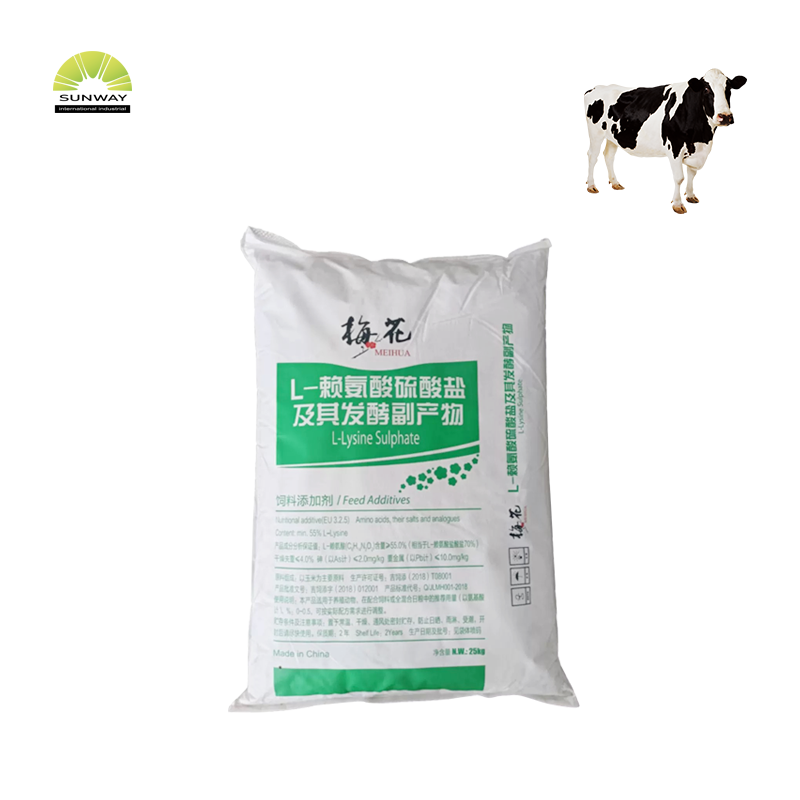
Enhanced mixing uniformity: Low-dust lysine sulphate is formulated having controlled particle sizes and low contents of dust that enhances its mixing capability with premixes and complete feeds. Their uniform particles ensure that they are evenly spread during mixing and thus do not separate the nutrients when the processing is done. Consequently, the delivery of amino acids to each feed portion is uniform, which enhances the performance of the animals.
Improved handling and safety: Low-dust lysine sulphate provides cleaner and safer working conditions, limits inhalation hazards and contamination and lowers material wastage that is experienced when emptying bags or transferring them. In addition, it minimizes the excessive dust control systems that lower the costs of maintenance. Better safety and handling will enhance efficiency in the operation because spillage decreases, the product is visible, and the flow is smoother.
Cost-effective: Low-dust lysine sulphate is more suitable on the cost factor than other sources of lysine since it is highly bioavailable, minimizes wastes, and the inclusion rates are also efficient. The reduced content of dust implies that the product is not lost during transportation, storage or mixing, which means that an increased amount of the product is shipped to final consumers.
Better stability and flowability: Low-dust lysine sulphate is a highly stable and free-flow ingredient. Thus, it moves freely through equipment without clogging machine parts. Furthermore, its flowability reduces clumping, even under humidity or pressure, ensuring consistent dosing accuracy during production. Its stability prevents the separation of nutrients or chemical interaction with other premixes. This makes the lysine content active, increasing overall product quality.
Promotes growth and development: Lysine is a major amino acid that helps in muscle building, tissue healing and growth. Low-dust lysine sulphate provides lysine at its high level of bioavailability, allowing animals to utilize the feed protein in turning it into lean tissue. Regular feeding will result in the uniform development of animals, a healthy skeletal system, and young animals will be able to have the potential to reach their development levels.
Optimizes feed conversion: Low-dust lysine sulphate optimizes a high feed ratio. It aids animals such as herds and flocks to effectively utilize dietary protein by providing the first-limiting amino acid (lysine) in proportional amounts. Once the lysine needs are satisfied, it takes less feed to stimulate the optimal growth of animals. This lowers the cost of feed, improves nutrient uptake and reduces production of wastage.
Enhances carcass quality: Low-dust lysine sulphate increases carcass quality in meat-producing animals like pigs and cows. It is essential for lean muscle deposition, optimizing the muscle-to-fat ratio. This leads to more uniform carcasses with improved meat yield. Furthermore, it enhances backfat thickness control, promotes muscle conformation, and dressing percentage. This contributes to better processing efficiency and higher-quality end products.
Supports immune function: Low-dust lysine sulphate is able to maintain the immune capacity by aiding antibody production. This increases resilience to diseases and enhances immunity to vaccination. It makes sure that animals maintain a steady level of lysine that will be useful in maintaining metabolism amidst a disease difficulty. It also decreases mortality rates, decreases veterinary bills and enhances performance. This, in the end, leads to healthier and more productive livestock.
Reduces environmental impact: Low-dust lysine sulphate increases the efficiency of nutrient use. During the appropriate conversion of food protein by the animals, the emission of nitrogen into the environment is minimal, resulting in a reduced environmental load.
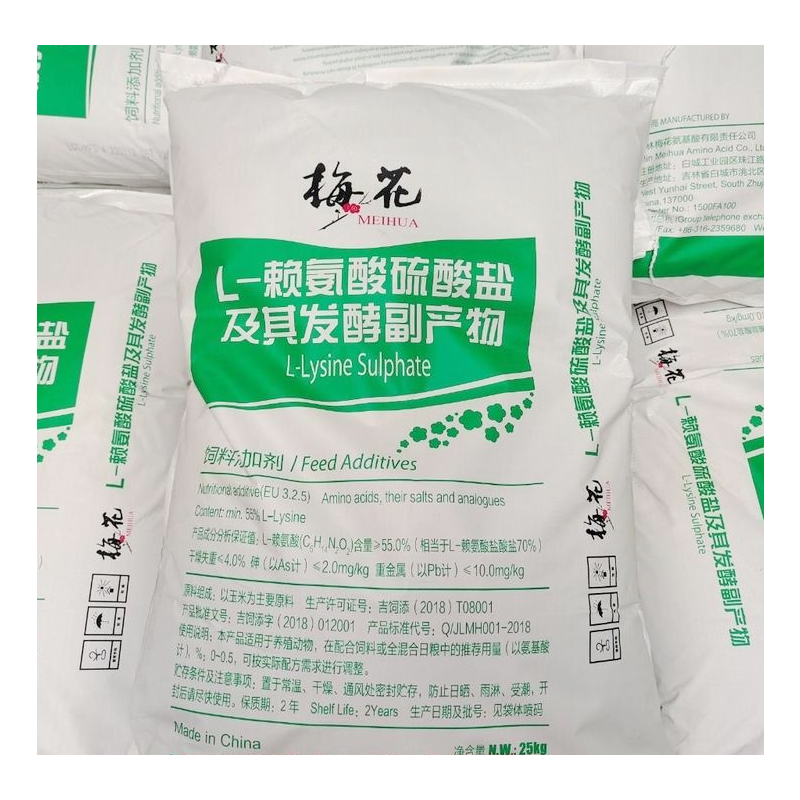
Harmonize particle size: As low-dust lysine sulphate is smaller than other macro ingredients, match the particle size, or nutrient separation will take place. To eliminate the separation of ingredients during or after mixing, milling of low-dust lysine sulphate is used to make it smooth. The mix has a smooth movement when it has been matched with other ingredients, enhancing uniform distribution.
Pre-blend micro-ingredients: Pre-blend micro-ingredients such as amino acids, vitamins and trace minerals into an appropriate carrier and then pour the mixture into the main mixer. Pre-blending ingredients improves the effective volume of the ingredient and minimizes the chances of clumping, and ensures even distribution.
Use compatible carriers: Carriers also assist in diluting the ingredients so that they spread evenly. Ingredient separation is minimized by the selection of suitable carriers that suit the particle size and density of low-dust lysine sulphate. Limestone and salt carriers are also found to enhance flowability and minimize clumping, which is of great importance in premixes.
Ensure ingredients are dry: During ingredient preparation, make sure that they are dry and free-flowing. Dampness causes clumping, bridging and stops mixing of ingredients. Ensure the ingredients are stored under humidity-controlled conditions to make them maintain their structure.
Choose suitable mixers: Choose mixers suitable for fine powders. For example, ribbon mixers, paddle mixers, and double-shaft mixers are usually compatible with low-dust lysine sulphate. These mixers ensure deeper penetration of micro-ingredients into the batch. If you use the wrong mixer, it will lead to uneven mixing and poor uniformity.
Prevent buildup: Buildup is a situation that arises when the areas of the mixer do not get sufficient movement. Fine powders, in this instance, will settle down, giving an uneven distribution. The mixers will be marked with regular checks and cleaning to avoid accumulation, which may lead to variation in the batches. An adequate arrangement will guarantee the homogeneous mixing of the whole batch.
Maintain optimal mixer loading levels: All mixers operate optimally in 70-80 percent capacity. An insufficient supply of material will not give the same blending effect; excess will restrict movement. Hence, ensuring proper loading to offer uniform blending of low-dust lysine sulphate.
Adequate blade design and speed: The mixer blade should be able to produce a good level of mechanical force without excessive turbulence, which can cause ingredient separation. The mixing of ingredients can be affected by the blade angle, speed and spacing.
Follow the correct order: Add ingredients in the correct order to avoid premature clumping. Start with macro ingredients, followed by medium components, and micro-ingredients. Low-dust lysine sulphate should be added towards the final ingredient to ensure it is evenly distributed without settling at the bottom.
Optimal mixing time: Under-mixing and over-mixing can reduce mixing uniformity. While under-mixing leaves clusters of micro-ingredients, over-mixing can cause particles to settle at the bottom. Conduct time tests at intervals to determine the ideal mixing duration for your specific formulation. Remember, low-dust lysine sulphate needs enough time to evenly mix but not so long that fine particles separate again.
Control environmental conditions: Humidity reduces flowability, while temperature fluctuations can cause clogging. Controlling the environment ensures that low-dust lysine sulphate is dry and free-flowing.
Use anti-caking agents: As needed, add small amounts of anti-caking agents or flow agents to improve movement. These agents prevent clogging and allow easy blending with other ingredients.
Use proper sampling techniques: Sampling at various points of the mixer - top, middle, bottom, and discharge stream- should be done to ensure quality control. This provides a correct representation and identification of variations in the distribution of micro-ingredients.
Monitor Coefficient of Variation Levels: The coefficient of 5-7% or less will indicate good premix uniformity. Frequent inspections will ensure the quality remains the same, and problems are detected promptly, like mixers are running inefficiently.
Use tracer nutrients or markers: Markers, or salt or iron, can be used to determine the potential distribution of micro-ingredients evenly. With the tracer nutrients, it is easy to see the mixing performance clearly and optimize the blending parameters.
Prevent segregation: When the vibration is too high or the fall distance is too long, the fine particles will settle apart. When properly handled, this leads to equal distribution.
Use appropriate packaging: Packaging should be waterproof, anti-static, high-strength packaging should be used to maintain the quality of low-dust lysine sulphate premixes.
Maintain stable storage conditions: Premixes are to be kept in an environment that is not exposed to direct sunlight, humidity, or changes in temperature. Clumping and degradation of nutrients are avoided by good storage conditions. Low-dust lysine sulphate will not lose its quality when stored in a cool, dry place.
Follow proper procedures: Reduce shaking, vibration and repetition. The correct handling minimizes the separation of the nutrients so that the profile will be the same for each batch.
Achieving mixing uniformity is essential for producing consistent premixes. With low-dust lysine sulphate, you can achieve precision, safety, and nutrient delivery. If you’re searching for high-quality low-dust lysine sulphate, contact us, and we’ll be happy to assist.
The lack of lysine sulphate can limit the body’s ability to synthesize new proteins and tissues. This deficiency makes lysine the limiting amino acid, which reduces lean body mass and negatively affects metabolism.
Low-dust lysine sulphate has superior handling properties, which lead to accurate nutrient dosing, better flowability, and a sustainable working environment. It also reduces product loss, making it an ideal component in premixes.
The main purpose of lysine is to serve as a building block for all proteins in an animal’s body, which is crucial for growth, tissue repair, and overall maintenance. Since animals cannot synthesize lysine on their own in sufficient quantities, lysine supplements are needed for optimal performance.
Yes, the particle size of low-dust lysine affects mixing uniformity. Very fine powders with small particle sizes mix more easily and remain uniform, while differences in size can lead to ingredient separation.
Yes, over-mixing of low-dust lysine can reduce mixing uniformity. This can lead to ingredient separation and particle breakdown. Improving mixing uniformity ensures the end product meets consistent uniformity requirements.